





Exploring the “Refugee Gap”
Refugee Gap: What is it?
The “refugee gap” is a term used to describe how refugees are more often financially insecure, although qualified, compared to other individuals in the country where they are trying to build a new future. Researchers focus on three areas to notice the effects of the refugee gap: (1) employment, (2) occupational level, and (3) income (see, for example, Wilkinson and Garcea 2017 and Connor 2010).These areas highlight the extent to which refugees can economically integrate into a new society.
International and Canadian research shows that the refugee gap does exist. Refugees are sensitive to experiencing a short-term and/or long-term disconnect between their level of skills and the quality of their employment prospects. This can include the type of job they are likely to be employed in, their position in workplace hierarchies or their “ranking,” and the amount of their earnings.
Trends at Jumpstart
Jumpstart’s records from 2023 and 2025 show the prevalence of underemployment among educated and English-speaking refugees. Similar trends have also been noted for refugees in survival jobs. This blog is focused on refugees who are underemployed, or particularly, in semi-permanent or permanent jobs that do not match their skills and/or their expected incomes.
Challenges to meaningful employment can be wide-ranging, from refugees facing discrimination in workplaces, lacking reintegration support, having an inadequate understanding of Canadian workplace culture, or prioritizing immediate financial assistance. At Jumpstart, we collaborate with both employers and refugees, closing gaps that are within our power.

Drawing from the refugee gap, refugees are essential components in enhancing a nation’s economy. Interested in how? Kindly read our blogs on The Resilience Factor, Building a Stronger Workforce and Why Canada Needs Refugee Talent.
Education and Underemployment
It is commonly accepted in society that education can influence the type of job an individual finds. While higher education, by itself, does not guarantee a job or fixed salary, it is thought to improve one’s chances.
Jumpstart’s data from 2023-2025 shows that roughly 4% of refugees who were unemployed before becoming clients are currently underemployed. Within this refugee population, roughly 75% possess master’s or bachelor’s degrees. This shows that the refugee gap can affect refugees with higher education, along with those who have completed primary or secondary levels of education.
English Proficiency and Underemployment
Refugees are generally expected to become or already be somewhat fluent in English for citizenship and employment opportunities, as it is one of Canada’s official languages.
A Canadian Language Benchmarks (CLB) level between 5 to 8 is considered intermediate, which is ideal for professional work and communication. In the refugee population of unemployed tounderemployed (4%), the average CLB level is approximately 7.1. This means that, similar to higher education, the refugee gap affects refugees who are comfortable with English.
Underemployment and the Refugee Gap
The relationships between education, English fluency, and underemployment highlight that refugees can face challenges in securing meaningful job opportunities, even though they are highly qualified and skilled. Underemployment is one illustration of the refugee gap, as it can lead to lower earnings and slower advancement in workplace hierarchies. Hidden talent does not allow refugees to make effective use of their backgrounds and qualifications. It also does not maximize a nation’s economic growth.
Similar challenges are also faced by refugees who are in survival jobs, and if you would like to learn how some of these challenges can be tackled, please consider reading our blogs on Seeking Meaningful Employment and Collaboratively Addressing Barriers to the Meaningful Employment of Refugees.
Final Thoughts
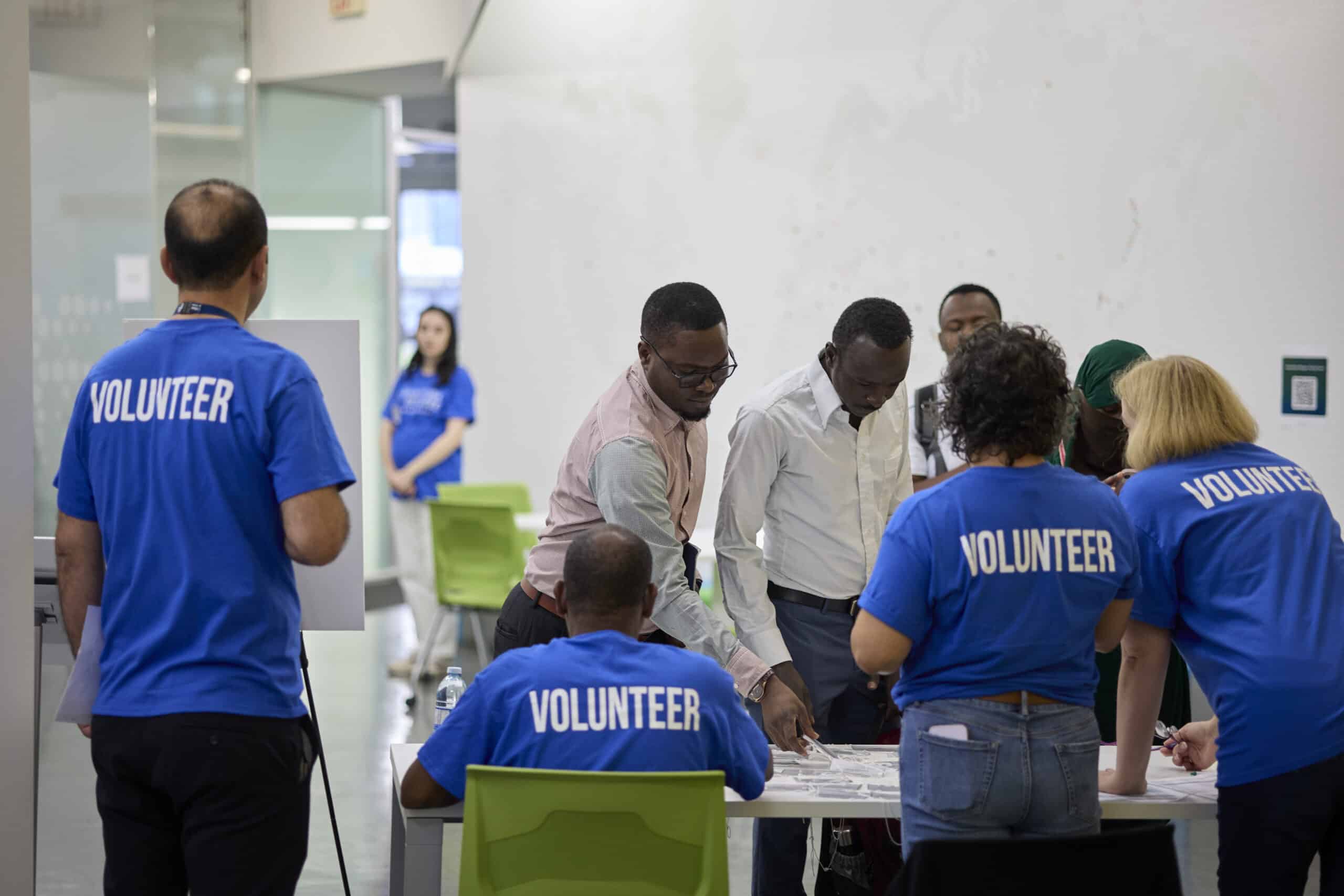
While it is easier said than done, the relationships between education, English proficiency, and underemployment should not be seen as discouraging. Refugees should not feel as though their chances of finding meaningful employment are low because of the level of their education or fluency in English. At Jumpstart, we believe that refugees can grow and advance their careers if theybecome aware of challenges and feel empowered to overcome them. The journey may be daunting, but Jumpstart’s staff and volunteers are here to support the success of refugees, alongside the support of employers and other organizations.
References
Connor, Phillip. 2010. “Explaining the Refugee Gap: Economic Outcomes of Refugees versus Other Immigrants.” Journal of Refugee Studies 23(3):377–97. https://doi.org/10.1093/jrs/feq025
Wilkinson, Lori, and Joseph Garcea. 2017. The Economic Integration of Refugees in Canada: A Mixed Record? Washington, DC: Migration Policy Institute. https://www.migrationpolicy.org/research/economic-integration-refugees-canada-mixed-record