


Beyond the Resume is a storytelling series that reframes refugee professionals not as resettlement cases, but as global connectors and economic catalysts in Canada.
Skilled, but Overlooked: The Reality of Credentials in Canada
When Khaldoun Albadr arrived in Canada in September 2023, he brought with him more than the trauma of displacement—he carried years of entrepreneurial experience, a commitment to community, and a dream to rebuild. Like many Syrian refugees, Khaldoun’s story is one of strength, sacrifice, and the search for dignity in a new land.
A Thriving Career Left Behind
Back home in Syria, Khaldoun was a seasoned entrepreneur. He had successfully built and led multiple profit-based businesses, known for his strong leadership and ability to develop high-performing teams. Even amid conflict, he found ways to innovate and create jobs. Yet, upon arriving in Canada, Khaldoun quickly discovered that credentials and experience from back home do not always translate in a new system.
Refugees often face a harsh reality: professional networks are gone, certifications are unrecognized, and the “Canadian experience” gap overshadows their skills.
A Mindset Shift: From Profit to Purpose
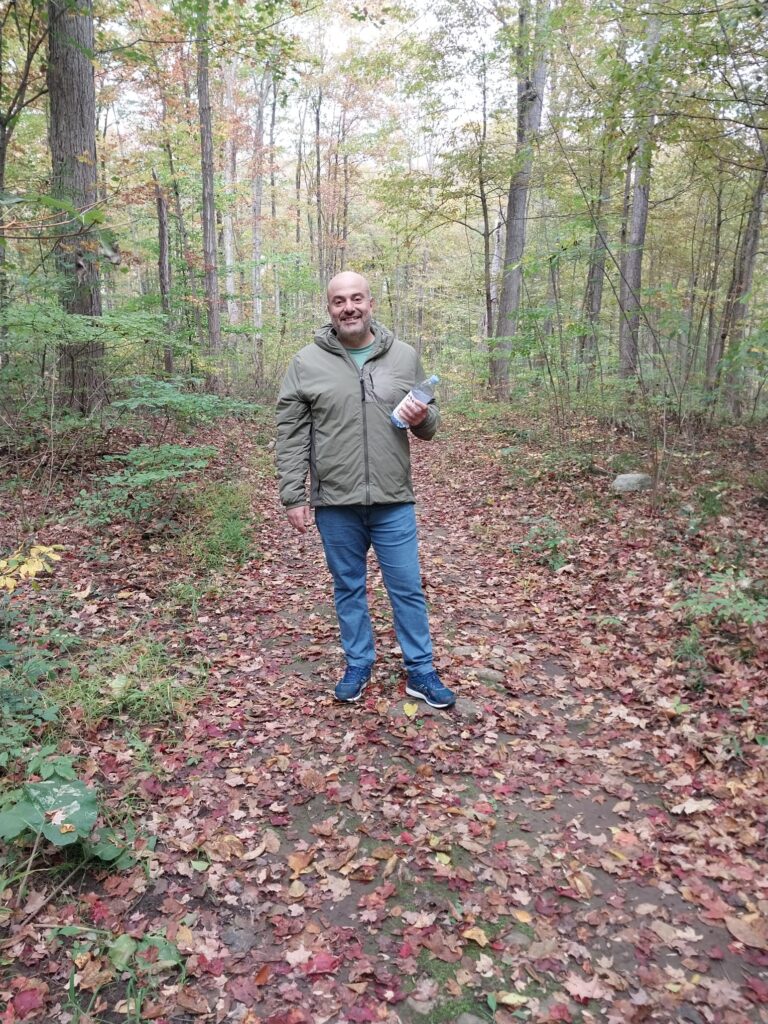
Despite his deep roots in the private sector, Khaldoun embraced change. “My whole experience was in profit-based business,” he explained. “But I had to switch my mindset—now I am exploring the nonprofit sector.”
His wife, a former UN World Food Program employee, played a key role in that transition. Her experience in the humanitarian sector inspired Khaldoun to consider how his leadership could be redirected toward service, not just business success.
Humble Beginnings and Harsh Realities
Together, they began working as Uber Eats drivers—far from Khaldoun’s previous role as a business owner.
“It was tough, but we did what we had to do,” he shared, describing the early months with a mixture of pride and humility.
Despite submitting hundreds of applications, Khaldoun received no callbacks—not even for entry-level roles. Like many refugees, he found himself invisible in the Canadian job market, navigating a system that undervalues international experience and struggles with bias.
A Turning Point: One Connection, One Opportunity
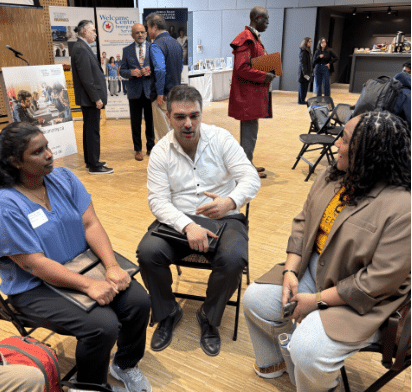
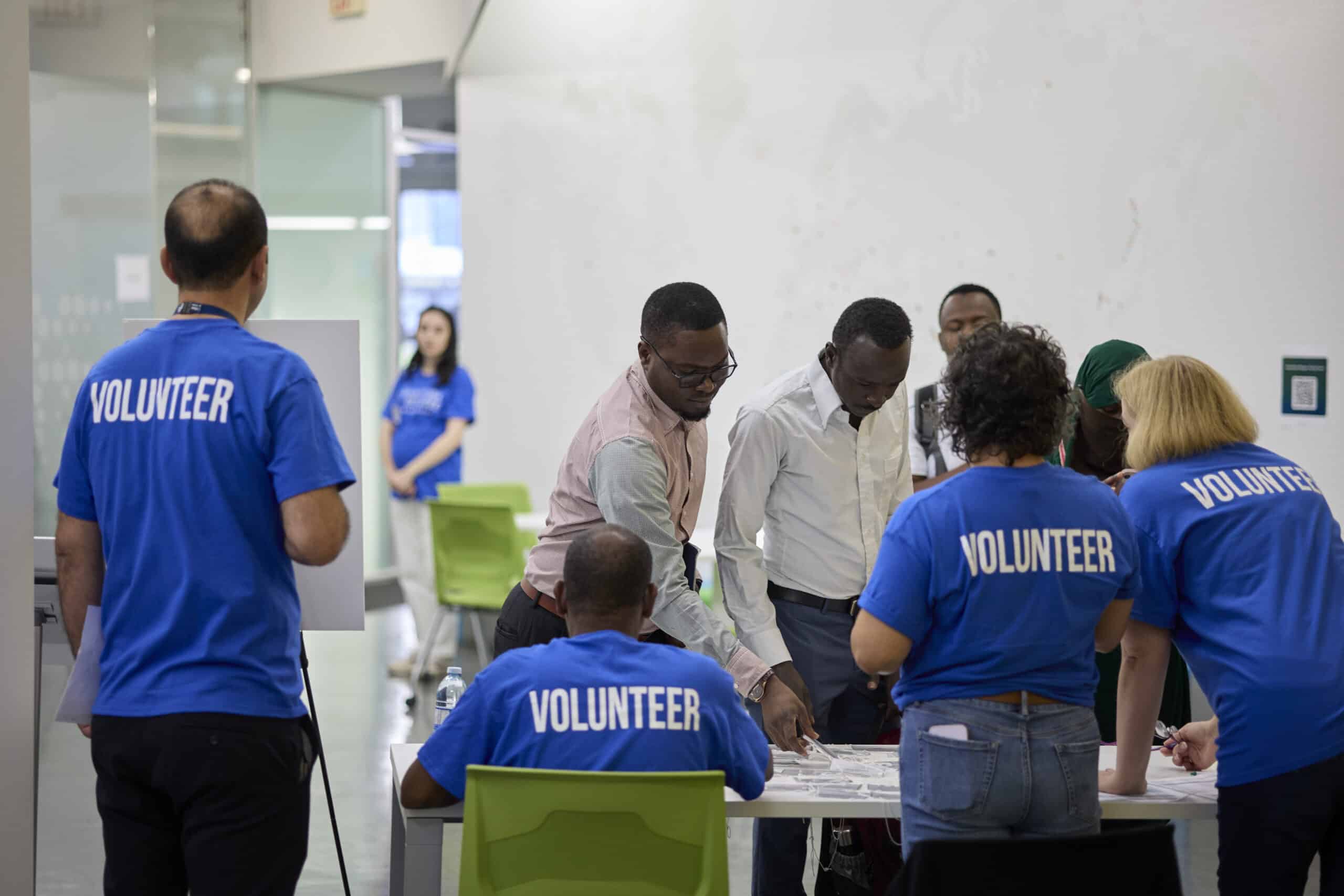
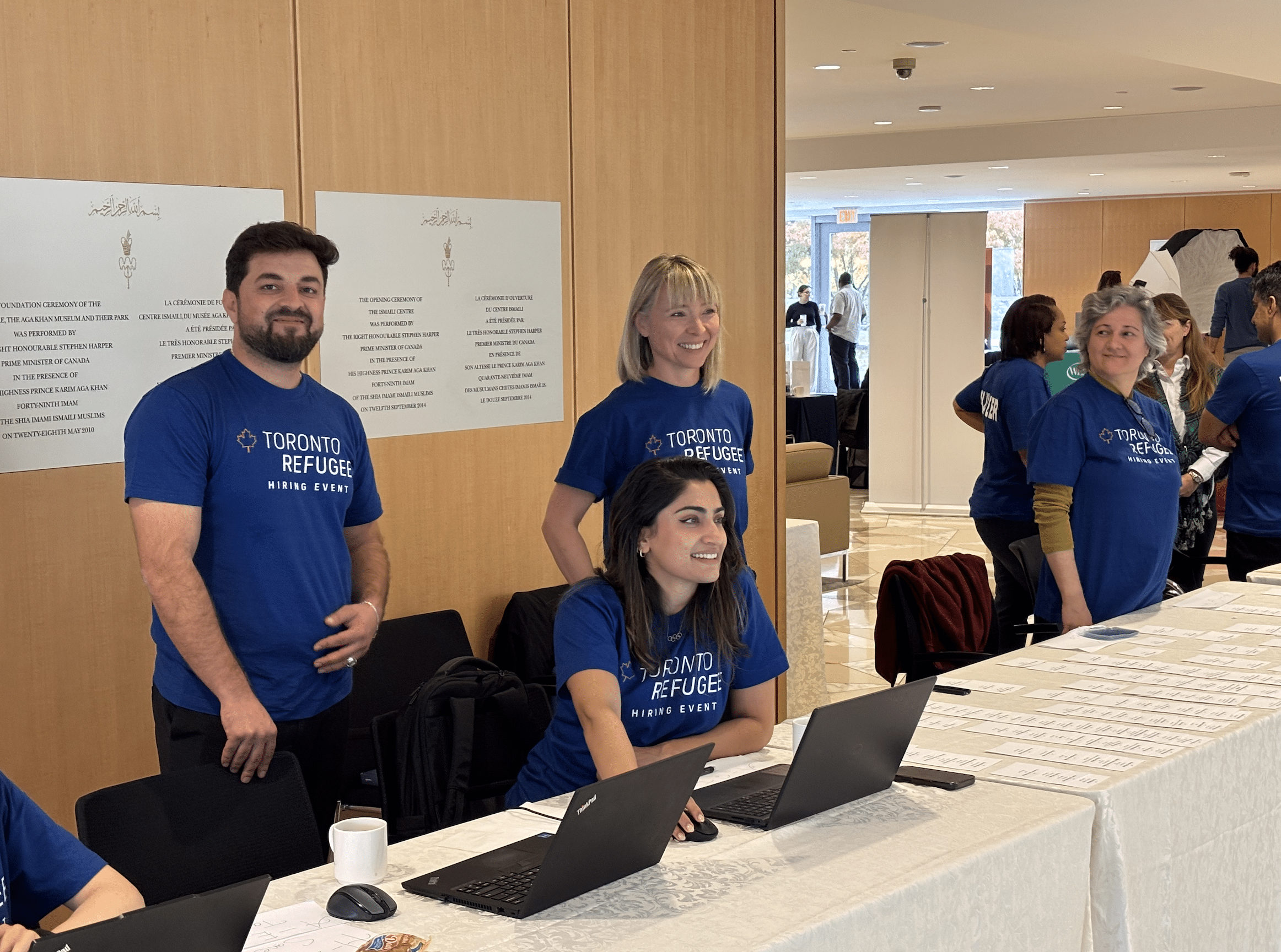
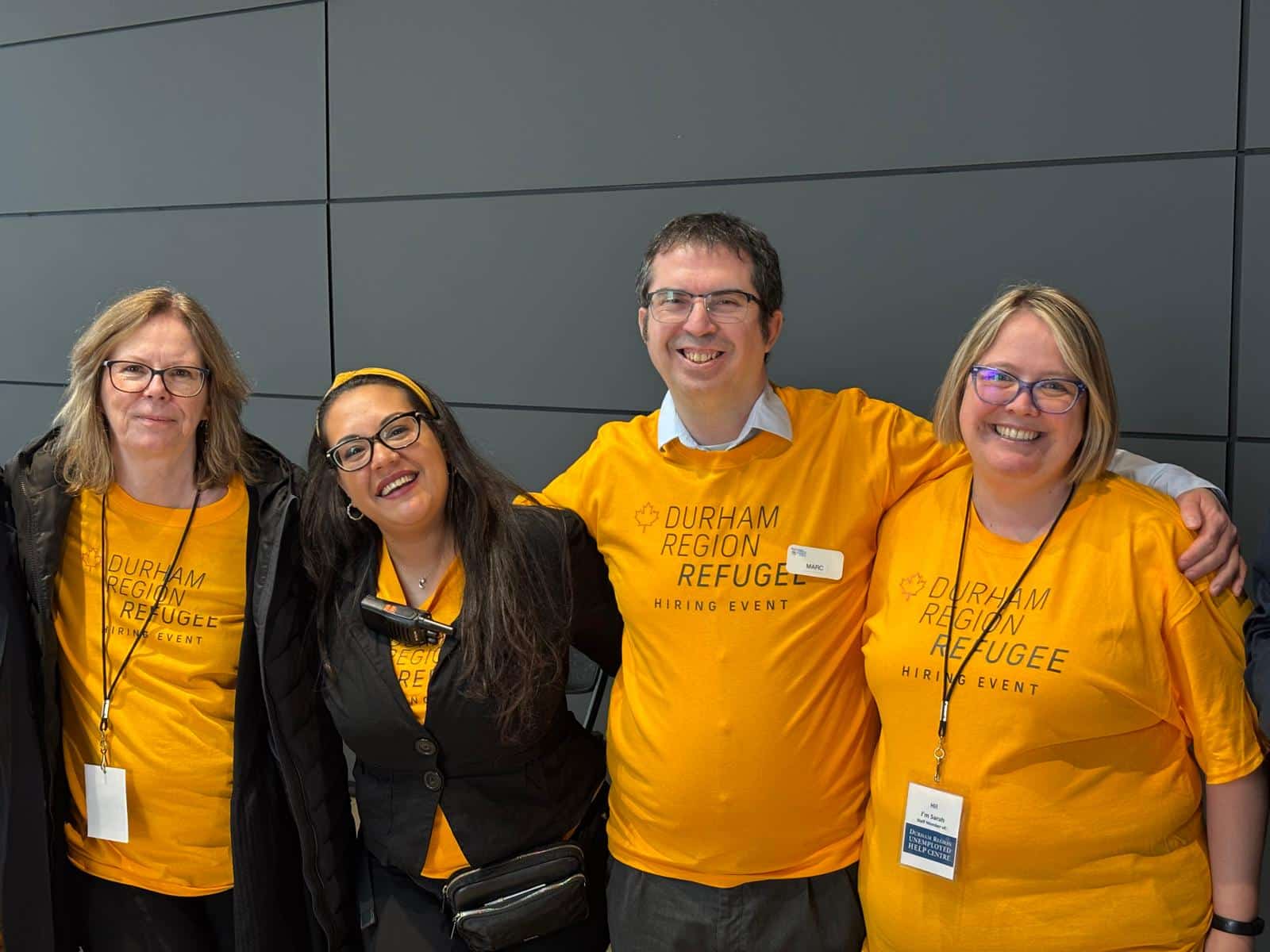
Everything changed when Khaldoun attended a hiring event specifically designed for refugees and newcomers. There, a representative from IKEA listened to his story and offered something no algorithm had—human connection.
“With just one referral, I got the interview—and I got the job,” he said. “After all the silence, one human connection opened the door. That’s how powerful networking and community support can be.”
His Sister’s Story: A Painful Example of Systemic Barriers
Khaldoun’s story is one of success—but also of witnessing loss. He shared the story of his sister, Dr. Rania Albadr, a well-known eye surgeon in Syria who owned her own clinic.
“She was famous back home,” he said. “But in Canada, everything changed.”
Despite her impressive credentials, she was unable to continue her career due to the overwhelming costs of re-certification and the immediate financial pressures of starting over.
“She tried exams and bridge programs, but between the high cost, lack of support, and the need to survive, she had to give up,” Khaldoun explained. “It is heartbreaking to see someone so talented unable to do what they love.”
From Refugee to Advocate
Today, Khaldoun is thriving in the nonprofit sector, where he is learning how to support other newcomers and build inclusive communities. He has also become a passionate advocate for refugee inclusion and employment equity.
His message to Canadian policymakers is direct and emotional:
“When someone tells you they are a refugee, it means they have come from pain. Refugees are delicate people. They are not asking for charity—they are asking for safety and dignity.”
He urges employers and leaders to look beyond the “refugee” label—to see the person, the professional, the potential.

Takeaways
-
Refugees carry more than trauma—they carry talent. Khaldoun’s journey highlights the wealth of experience many refugees bring with them, even if it is often overlooked.
-
Structural barriers waste potential. From re-certification costs to lack of employer understanding, many newcomers are shut out of industries they once led.
-
Human connection is transformative. One conversation, one act of trust, can change a refugee’s path from rejection to opportunity.
-
Refugees are not asking for charity—they are asking for a fair chance. They want to contribute. They want to thrive. They just need doors to open.